
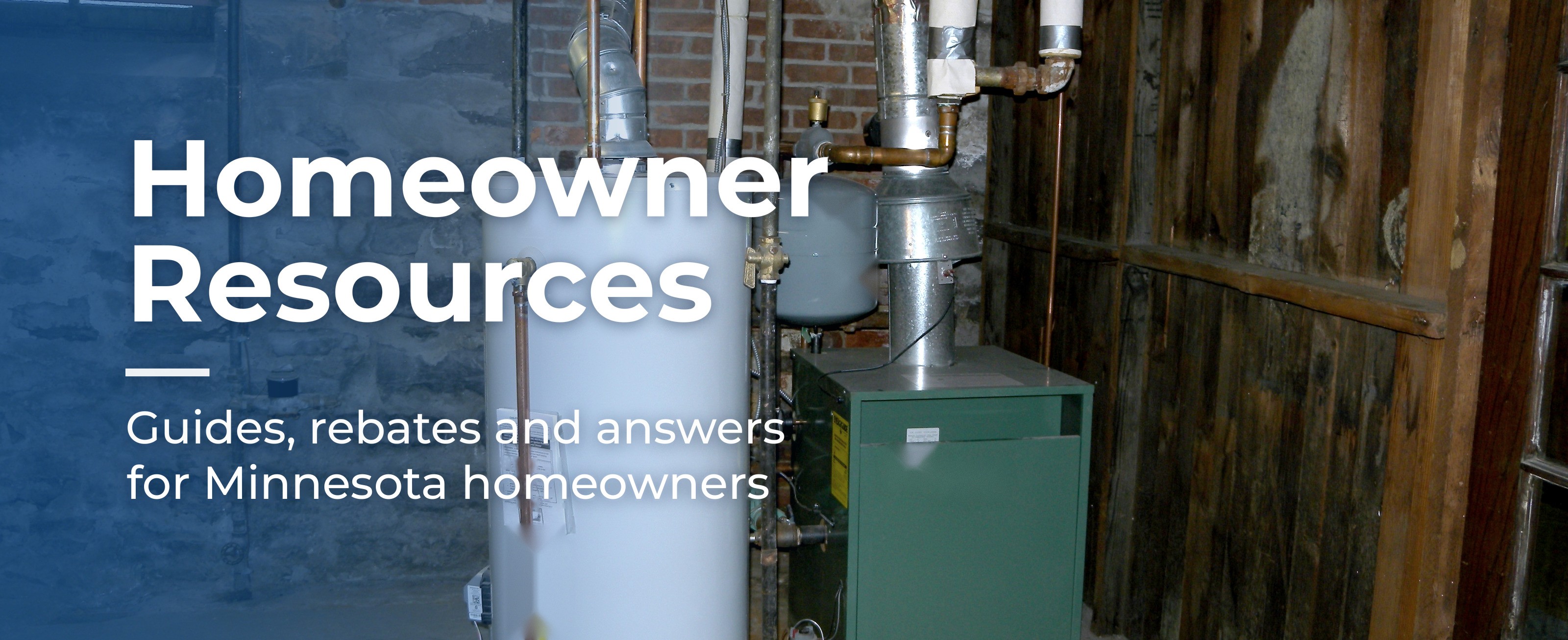
Homeowner Resources
Straight answers for Minnesota homeowners: how old is your water heater, is it time to replace it, and who should install the new one? Free guides and tools from WH2O, Water Heaters Only.
Cold shower? Let a pro take it from here.
Our free guide for Minnesota homeowners: what you can safely check yourself, what to leave to a licensed pro, and how to tell when it’s time to replace your water heater instead of nursing it through another winter.
Three questions every water heater owner should ask
Answer these and you’ll know whether you’re fine for now, should plan ahead, or need a pro this week.
Free tool
How old is my water heater?
The date is hidden in the serial number. Our age calculator decodes it in seconds for most major brands.
Use the age calculatorWarning signs
Is it time to replace it?
Rumbling, rusty water, a puddle at the base: here’s what your water heater may be trying to tell you.
See the warning signsInstallation
Who should install it?
A licensed local plumbing or HVAC pro. Find a Pro helps you find one near you.
Find a Pro near youHow old is yours? Find out below.
Signs it’s time to call a pro
Water heaters rarely quit without warning. Here’s what to watch (and listen) for, and what to do next.
It rumbles and pops
That’s usually sediment cooking on the bottom of the tank. Hard water, common in much of Minnesota, makes it worse.
Have a pro flush it. If an older tank stays loud after a flush, start planning a replacement.
The hot water looks rusty
Rusty or cloudy hot water can mean the inside of the tank (or its anode rod) is corroding.
Ask a pro to check it, especially if the tank is 10+ years old.
There’s water around the base
A drip from a fitting can often be fixed. A leak from the tank itself can’t be patched.
Shut off the cold water supply to the heater and call a licensed pro.
Hot water runs out fast
Sediment, a worn heating element or a heater that’s too small for your household. Cold Minnesota winter water doesn’t help.
A pro can tell you if it’s a repair or a sizing problem.
It’s pushing 10+ years
Most tanks last about 8 to 12 years. Past 10, ENERGY STAR suggests planning a replacement so you’re not rushed when it fails.
Check its age with the calculator above, then talk to a pro.
You smell gas
Don’t touch light switches or try to relight anything.
Leave the house and call your gas utility from outside. Then call a licensed pro.
Lifespan guidance: Rheem and ENERGY STAR. Anything beyond relighting a pilot per the label on the heater is a job for a licensed pro.
Hire a licensed Minnesota pro
WH2O sells through licensed local plumbing and HVAC contractors. They size, install and service your water heater, so start with a pro near you.
- Check your current heater’s age, size and fuel type (gas, electric or heat pump)
- Size it for your household and Minnesota’s cold winter water
- Install it to code, including venting and safety valves
- Tell you which utility rebates your new equipment may qualify for
Minnesota water heater rebates
Minnesota utilities offer rebates on qualifying high-efficiency water heaters, furnaces and heat pumps. Ask your contractor which rebates your new equipment qualifies for.


CenterPoint Energy
Energy-efficiency and water heater rebates for CenterPoint customers.
Minnesota Utility Rebate Finder
Not sure who your utility is? Pick your county to see which utilities serve it and their current rebates.
ENERGY STAR
Look up rebates by ZIP code and learn how heat pump water heaters save energy.
Rebates, amounts and deadlines change, and funds can run out. Check with your utility or your contractor before you buy.
Water heater FAQs for Minnesota homeowners
Tap a question to open it. For water heater age questions, see the calculator’s FAQ above.
How long does a water heater last?
Most tank water heaters last about 8 to 12 years, and tankless units often last 15 to 20 years with regular maintenance. Hard water, which is common in Minnesota, and skipped maintenance shorten that. If your tank is past 10 years and rusting or leaking, plan for a replacement; our free guide covers repair vs. replace.
Should I get a tank or tankless water heater?
A tank heater stores hot water, costs less up front and is usually a straight swap for your old one. A tankless unit heats water on demand, so it won’t run out and it saves space, but it costs more to install and may need gas line or venting changes. A licensed contractor can tell you which fits your home.
Why don’t I have hot water?
On a gas heater, the pilot or burner may be out, the gas valve may be off, or the status light may be flashing an error code. On an electric heater, check the breaker first. If you smell gas, leave the house and call your gas utility from outside, and for anything beyond relighting a pilot per the label on the heater, call a licensed pro.
Why is my water heater making noise, and how often should I flush it?
Popping or rumbling usually means sediment has built up on the bottom of the tank. Flushing about once a year helps, and more often with hard water. If an older tank stays loud after a flush, it may be near the end of its life.
What size water heater do I need?
As a rough guide, 1 to 2 people use 30 to 40 gallons, 3 to 4 people use 40 to 50 gallons, and 5 or more need 50 gallons and up. Check the first-hour rating on the label, not just the tank size. Tankless units are sized by flow rate, and Minnesota’s cold winter water calls for a bigger unit, so let a pro from Find a Pro size it for your household.
Gas, electric or heat pump: which is best?
Gas heaters recover quickly and usually cost less to run where natural gas is available, but they need venting. Standard electric models need no venting but recover more slowly and cost more to run. Heat pump water heaters use far less electricity but need more space and a condensate drain, and they cool the room they sit in; utility rebates often apply (see Minnesota water heater rebates above).
Ready for a new water heater?
Talk to a licensed pro near you. WH2O supplies Minnesota contractors from Golden Valley and Eden Prairie.
More from WH2O:Water Heater Age CalculatorHomeowner guideFind a ProFor contractors: Contractor Resources
